Outreach Tools That Work Outside
Outreach teams work in parking lots and encampments — here's how OpenPath brings field data collection and the annual PIT count into your HMIS without the usual scramble.
Outreach
Field-Ready Tools for Street Outreach and the PIT Count
Outreach doesn't happen behind a desk. The people who do this work are in parking lots, parks, and encampments — often without reliable internet, often with someone who's been burned by systems before and doesn't have time for a complicated intake process.
Software that doesn't work in the field isn't just an inconvenience. It means data gets lost, duplicated, or entered hours later from memory. And it means your HMIS reflects an office workflow, not the actual work.
Getting Ready for the PIT Count
The annual Point-in-Time count is one of the most logistically complex things a CoC does. You're coordinating volunteers who may be brand new, collecting data across multiple teams in one night, and trying to produce numbers that are both accurate and defensible.
Most communities spend weeks before and after a PIT count just managing the data. Getting forms ready. Training volunteers. Cleaning up what came back. Reconciling what ended up in HMIS with what was actually collected in the field.
OpenPath's PIT tool significantly reduces that lift.
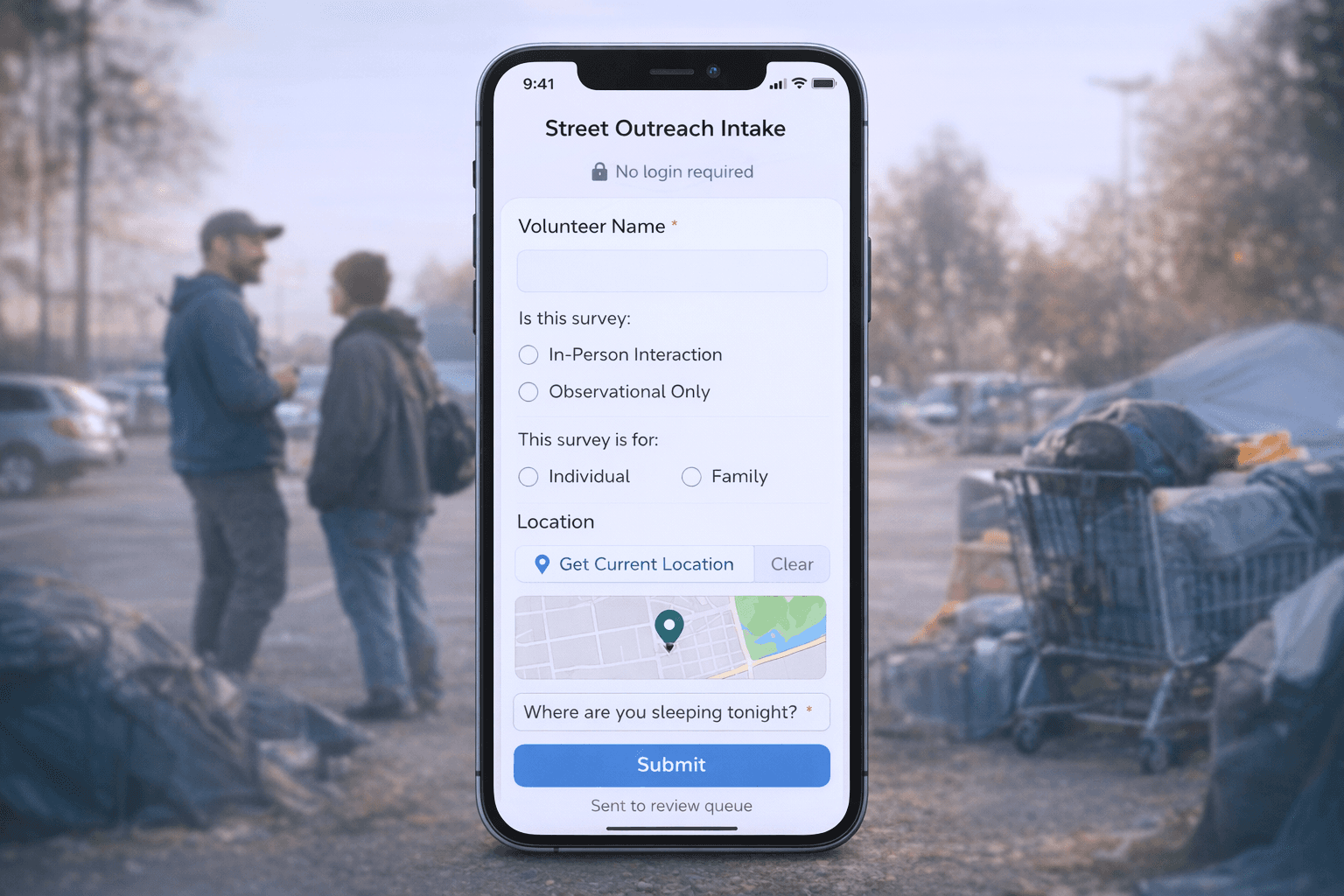
Volunteers don't need a login. Secure external forms enforce the required HMIS data elements while keeping the experience simple enough for someone who's never used the system. Submissions enter a review queue — treated as unverified data until an authenticated user reviews and approves them. Nothing hits your live system until someone checks it.
Less cleanup. More confidence in the count.
Location-Based Insights and Household Awareness
When a volunteer logs an interaction, they can drop a geographic pin to record exactly where it happened. This provides location-based data you can actually use — mapping encampment density, tracking where services are reaching people, identifying geographic gaps.
The tool is also household-aware. If a volunteer surveys a family, the system links household members together — rather than creating separate records that have to be manually reconciled later.
These aren't flashy features. They're the details that determine whether your PIT data is usable or just a headcount.
Direct Integration with HMIS
Standalone survey tools and spreadsheets create a problem that shows up weeks after the count: the data exists somewhere that isn't your HMIS.
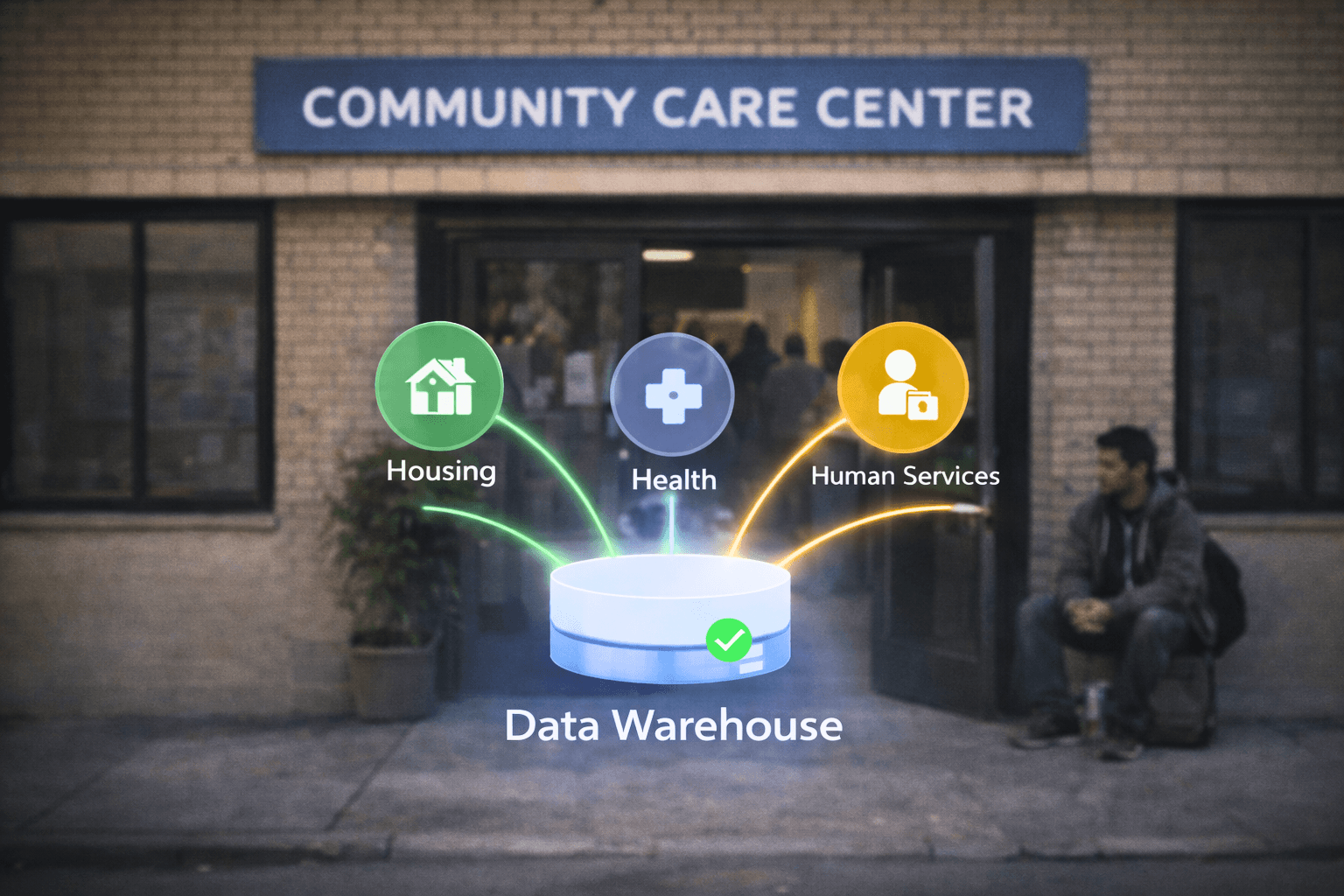
OpenPath feeds PIT and street outreach data directly into HMIS. Field interactions become enrollment records. Location data becomes mappable intelligence. Outreach contacts that start in the field can move into case management without re-entering information that was already collected.
This is the piece most communities are missing. Not better forms — better connection between what's collected in the field and what lives in the system.
Reduce Fragmentation
Outreach data should not get stranded in side systems. Collected once in the field. Manually transferred to HMIS. Reconciled against another list. This is how hours disappear and how communities end up with parallel records for the same person.
When outreach tools are connected to your HMIS from the start, the workflow changes. Teams capture information once. It flows into operations, reporting, and follow-up care. And the data actually reflects what's happening on the ground — not what someone remembered to enter later.